Ducati Diavel Owners Manual: Instrument panel on handlebar
- Lcd.
- Neutral light n (green). Illuminates when the gearbox is in neutral.
- High beam light
 (blue).
It turns on to indicate that the high beam lights are on.
- Engine oil pressure light

(red).
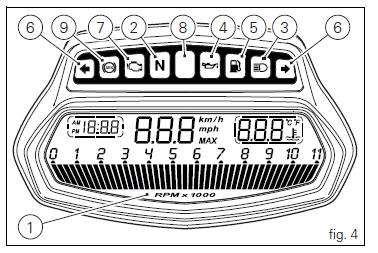
Illuminates when engine oil pressure is too low. It must turn on at key-on, but must turn off a few seconds after the engine has started.
It may come on briefly if the engine is very hot, but should go out again as engine speed increases.
 Important
If this light (4) stays on, stop the engine or it may suffer severe damage.
- Fuel warning light
 (amber
yellow).Comes on when fuel is low and there are about 4 litres of fuel left in the tank.
- Turn indicator lights

(green).Illuminates and flashes when the turn indicator is in operation.
- "Engine/vehicle diagnosis - eobd" light

(amber yellow).
It turns on in the case of "engine" and/or "vehicle" errors and in some cases will lock the engine.
- Limiter light "over rev"/ traction control light "dtc"
(red) (fig. 4):
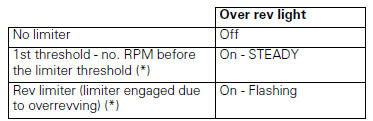
(*) Depending on the model, each calibration of the engine
control unit may have a different "setting" for the
thresholds that precede the rev limiter and the rev limiter
itself. 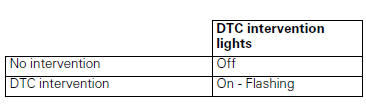
 Note
Note
If the over rev function light and the dtc intervention light should both come on at the same time, the instrument panel gives priority to the over rev function.
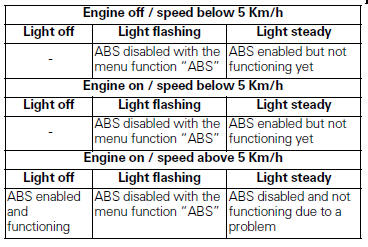
- Abs lights
 (amber yellow)
(fig. 4).This turns on to indicate that abs is disabled or not Functioning.
 Instrument panel (dashboard)
The vehicle is equipped with two instrument panels: an lcd
(1, fig. 3) Located on the handlebar containing the key
indications (speed, rpm, coolant temperature and clock) and
a tft colour display ( ...
 Lcd unit functions
Speedometer.
Gives road speed.
Rev counter.
Indicates engine revs per minute.
Clock.
Water temperature indicator.
Indicates engine coolant temperature.
Important
Stop riding i ...
Other materials:
Throttle twistgrip
Upper clamp
Counterweight
Screw
Handlebar
Grips
Throttle twistgrip
Bush
Screw
Bush
Throttle cables
Spare parts catalogue
Diavel abs handlebar and controls
Diavel carbon
abs
handlebar and controls
Important
Bold reference numbers in this section identify parts not sh ...
Key-on/key-off using the red key on the handlebar with the active key
A key-on can be performed by pressing the red key (6) on
the handlebar in the hands free on/off position and in
the presence of the active key (3, fig. 77).
Note
The active key (3, fig. 77) Has a range of approx. 1.5 M,
therefore it must be located within this range.
Key-off can be performed ...
Location of elements on motorcycle
(A) injection relay; (b) etv relay (throttle valve operating engine); (c)
radiator fan relay; (d) hands free relay.
(E) ecu; (g) bbs (black box system or central electronics); (f) abs hydraulic
unit with integrated control unit.
Fuses located at the rear left of the vehicle.
...